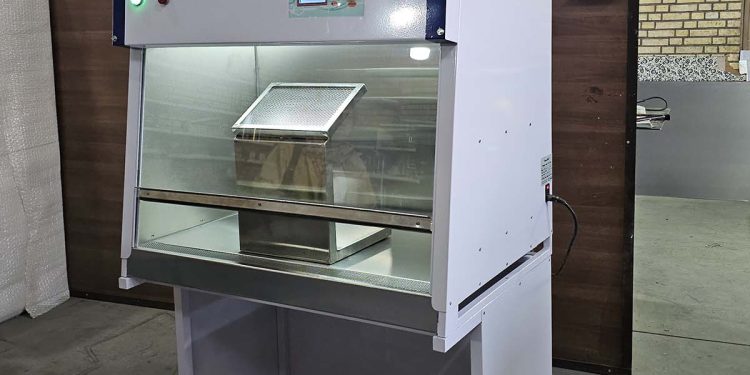
In recent years, the use of radioactive materials in medical sciences, pharmacy, and molecular research has grown significantly. The development of radiopharmaceuticals—one of the advanced branches of nuclear pharmacy—plays an important role in the diagnosis and treatment of diseases. However, working with radioactive materials requires strict safety principles and the use of standard protective equipment to prevent environmental contamination and radiation hazards for specialists.
One of the most important safety tools in this field is the radiopharmaceutical fume hood: a specialized device that, with radiation-resistant design and an advanced ventilation system, provides a safe environment for the synthesis and preparation of radioactive drugs.
In this article, we intend to examine the radiopharmaceutical fume hood scientifically and technically-its main components, its differencesfrom other laboratory hoods, and the unique features of radiopharmaceutical hoods manufactured by Kimiagene Pajooh Pars.
What Is a Radiopharmaceutical Hood and What Is It Used For?
In laboratory processes related to radioactive materials and radiopharmaceuticals, adhering to safety principles and controlling the spread of radioactive contamination is of vital importance. One of the primary pieces of equipment used to ensure this safety is the Radiopharmaceutical Hood. This device, as a ventilation and personal protection system, prevents the release of vapors, aerosols, and particles contaminated with radioactive materials into the work environment.
Kimiagene Pajooh Pars, with more than two decades of experience in designing and manufacturing specialized laboratory equipment, has brought the production of radiochemistry and radiopharmaceutical hoods into operation in accordance with international standards and the needs of the country’s research and medical centers.
Structure and Operation of the Radiopharmaceutical Hood
A radiopharmaceutical hood functions similarly to a chemical fume hood but is designed with special measures to control radioactive emissions. This hood has a lead body or internal lead lining to absorb gamma and beta radiation, and its front window is made of lead glass of appropriate thickness so that, while providing user visibility, it prevents the passage of radiation.
Contaminated air inside the hood is filtered by HEPA filters and activated carbon filters and then exhausted to the outside. An intelligent ventilation system and corrosion-resistant fans ensure a uniform and safe airflow. All internal surfaces are made of 304 stainless steel so that decontamination can be performed completely.
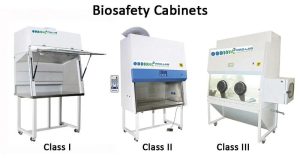
Types of Radio Hoods (Radioactive / Radiochemistry / Radiopharmaceutical Hoods)
Below we describe the types of radiopharmaceutical hoods:
Radiochemistry Hood
Designed for performing chemical reactions with radioactive materials. Features include:
All-steel body with lead lining for protection against gamma and beta radiation
HEPA filter + activated carbon filter to remove particles and vapors
Exhaust airflow with negative pressure
Viewing window made of lead glass
Application: synthesis of radiopharmaceuticals (e.g., FDG or Tc-99m) and stages of chemical combination of isotopes.
Radiopharmaceutical Fume Hood
This type is specifically for the preparation, dilution, and final packaging of radioactive drugs. Compared to a radiochemistry hood, it has a more complex filtration system and higher radiation protection. Features:
Full lead-lined design
Ability to control temperature and humidity in the workspace
Multi-stage filtration (HEPA + activated carbon + prefilter)
Display for radiation and internal pressure monitoring
Application: nuclear pharmacies, production and quality control (QC) centers for radiopharmaceuticals.
Lead-Shielded Glove Box / Hot Cell
The most advanced type of radio hood—essentially a fully lead-shielded enclosed chamber with fixed gloves (glove ports). Typically used for highly radioactive isotopes. Features:
Full lead body with 5 to 10 mm thickness
Long fixed gloves to work without direct contact
Thick lead glass (10 to 15 mm)
Fully filtered ventilation and exhaust to the central exhaust system
Radiation monitor, alarm system, and interlock
Application: working with high-dose isotopes (e.g., I-131, Lu-177, Y-90) and radiotherapy centers.
Radioactive Transfer Hood (Transfer Hood / Pass-Through Box)
Hoods for transferring radioactive materials between sections without direct user contact. They have two-sided lead doors with an interlock system.
Application: connection between synthesis hood and QC hood, or transferring the sample to another test location.
Local Exhaust with Radioactive Filtration (Local Exhaust / Radioactive Filter Hood)
A simpler, more compact model used in environments with low radioactivity.
Application: educational work, laboratories with limited radioactive activity, or initial sample preparation.
Summary Comparison of Radio Hood Types
Type: Radiochemistry
Protection Level: Medium
Suitable Isotopes: Low-dose isotopes
Key Feature: Semi-lead design, HEPA filtration
Application: Synthesis reactionsType: Radiopharmaceutical
Protection Level: High
Suitable Materials: Radiopharmaceuticals
Key Feature: Multi-stage filtration system
Application: Packaging and QCType: Lead-Isolated (Glove Box / Hot Cell)
Protection Level: Very High
Suitable Isotopes: Highly radioactive isotopes
Key Feature: Full lead body with fixed gloves
Application: Industrial production and radiotherapyType: Radioactive Transfer
Protection Level: Medium
Suitable Materials: Any type
Key Feature: Two-sided interlock system
Application: Safe transfer of materialsType: Local Radioactive Exhaust
Protection Level: Low
Suitable Materials: Low-hazard materials
Key Feature: Lightweight, portable design
Application: Educational
Comparison Table: Radiopharmaceutical Hood vs. Chemical and Biological Hoods
Protection Type
Radiopharmaceutical Hood: against radioactive contamination and chemical vapors
Chemical Fume Hood: against chemical vapors and gases
Class II Biological Safety Cabinet: against microbial contamination
Body and Window
Radiopharmaceutical Hood: lead lining and thick lead glass
Chemical Hood: ordinary steel body
Class II BSC: HEPA filter present, but no lead lining
Filtration System
Radiopharmaceutical Hood: HEPA + activated carbon + direct exhaust
Chemical Hood: simple exhaust ventilation
Class II BSC: two HEPA filters for product/personnel/environment protection
Primary Application
Radiopharmaceutical Hood: radiopharmaceuticals, nuclear medicine
Chemical Hood: general chemical reactions
Class II BSC: cell and microbial culture
Features and Technical Specifications of Kimiagene Radiopharmaceutical Hoods
Radiopharmaceutical hoods manufactured by Kimiagene Pajooh Pars are designed in accordance with radiation safety requirements and the guidelines of the Atomic Energy Organization of Iran (AEOI). Main features include:
Fully stainless-steel interior with protective lead lining
Lead glass with adjustable thickness based on isotope type
Double filtration system (HEPA + activated carbon)
Digital controller for fan speed and internal negative pressure
Radiation monitor and radiation contamination alarm system
Ergonomic design with standard workspace
Customizable dimensions and capacities based on laboratory needs
All models undergo air-leak testing, airflow uniformity evaluation, and radiation protection assessment before delivery.
Applications of Radiopharmaceutical Hoods in Research and Industry
These hoods are used widely, including:
Synthesis and labeling units for radiopharmaceuticals (e.g., FDG, I-131, Tc-99m)
Nuclear medicine departments of hospitals
Quality control centers for radioactive drugs
Radiotherapy research institutes and higher-education centers
Pharmaceutical and research industries related to radiochemistry
Their use ensures user and environmental safety and prevents cross-contamination during critical stages of production and analysis.
Standards and Design Requirements for Pharmaceutical Hoods (Especially Radiopharmaceutical Hoods)
Whether for radioactive, chemical, or biological drugs, compliance with standards is one of the most important criteria for safety and performance approval of laboratory equipment. Below are technical, documented requirements for the design, manufacture, and testing of pharmaceutical hoods—especially radiopharmaceutical hoods.
ISO 17873:2022
Performance and Safety Requirements for Containment Systems and Fume Hoods (laboratory ventilation and contamination-control enclosures). Key points:
Defining permissible air-leak limits from the hood
Design requirements to maintain internal negative pressure
Methods for testing airflow uniformity (Velocity Distribution Test)
Designing the exhaust path to prevent recirculation of contaminated air
Evaluating permissible noise level, internal illumination, and vibration level
For radiopharmaceutical hoods, this standard is the main basis for ventilation and negative-pressure design.
EN 14175 (European Standard for Fume Cupboards)
Includes:
Gas-leak test methods
Performance testing under various airflow conditions
Evaluation of HEPA and activated carbon filters
Standard for user distance from the hood sash/front opening
Specifications for automatic ventilation control systems
According to EN 14175, face velocity at the hood opening should be 0.4 to 0.6 m/s to balance safety and flow stability.
IAEA (International Atomic Energy Agency) Standards
IAEA publishes guidelines and radiation-safety requirements for working with radioactive materials that are mandatory for radiopharmaceutical hood design:
IAEA Safety Standards GSR Part 3: radiation protection requirements in workplaces
IAEA Safety Reports Series No. 64: guidance on designing radiochemistry spaces and ventilation equipment
Mandatory lead shielding with thickness proportional to isotope type
Controlled exhaust path and the use of HEPA and activated carbon filters prior to discharge
Built-in radiation monitoring and leak-alarm systems
These standards form the safety basis for products by reputable companies, including Kimiagene Pajooh Pars.
Atomic Energy Organization of Iran (AEOI) Guidelines
In Iran, the design and manufacture of equipment related to radioactive materials must comply with AEOI regulations. Key points:
Evaluating the Shielding Factor of the body and lead glass
Controlling the exhaust path and preventing air backflow
Annual calibration requirements for radiation monitors
Recording and maintaining documentation for radiation-leak and filtration tests
Domestic manufacturers such as Kimiagene Pajooh Pars must obtain conformity approval from AEOI experts before installation.
ISO 14644 (Cleanroom Classification)
This standard specifies indoor air cleanliness levels in terms of particulate concentration. Pharmaceutical hoods usually should operate at least at ISO Class 7 or better. This means:
Particles larger than 0.5 μm must not exceed permissible limits
HEPA filters must have ≥99.97% efficiency for 0.3 μm particles
Mechanical and Electrical Design Requirements
Based on IEC 61010-1 and ASTM E2352:
The electrical system must be safe, spark-proof, and properly grounded
Body and internal fittings must be made of corrosion-resistant, heat-resistant materials
Lead glass must be resistant to mechanical impacts
Emergency exhaust must remain active during power loss or critical conditions
Ergonomic Design and User Safety
In the design of Kimiagene’s radiopharmaceutical hoods, alongside technical and protective aspects, ergonomics and user safety are carefully observed. Ergonomics means adapting equipment to human physical needs and limitations; therefore, these hoods are designed to allow users to work for long hours without fatigue, physical strain, or reduced accuracy.
The angle of the lead glass is adjusted to provide a direct, glare-free view for the operator, while the appropriate thickness ensures full radiation protection. The working height and control positions are selected based on human body dimensions to reduce repetitive and unnatural movements. Using LED lighting with standard intensity and angle allows precise observation of samples without glare.
Beyond user comfort, radiation-safety principles are also observed: appropriate distance between the operator and the radioactive source, uniform distribution of incoming and exhaust airflows, and radiation/negative-pressure alarms—all ensure safe, stable working conditions. Thus, ergonomic and safety-centered design in Kimiagene’s radiopharmaceutical hoods not only increases user productivity but also minimizes radiation exposure risk and provides a safe, stable, user-friendly environment for radiochemistry activities.
Installation and Commissioning of the Radiopharmaceutical Hood
Installation and commissioning is a specialized process that must be performed by trained technical experts and in accordance with radiation-safety instructions. Before installation, the device location is evaluated for ventilation, power access, exhaust routing, and room pressure level to ensure stable airflow and complete removal of contaminated vapors. After positioning the device, connections for air discharge, filter pathways, and the central exhaust are set, and a negative-pressure test is performed to evaluate ventilation performance.
Then, HEPA and activated carbon filters are installed in their designated housings and pressure drop is checked using a digital manometer. Electrical systems, internal lighting, and radiation alarms are tested individually to ensure correct operation. Finally, initial calibration of the radiation monitor, fan-speed adjustment, and air-leak testing are performed by the technical team. After final approval, the device is handed over in the presence of a radiation-protection specialist and complete user training and safety instructions are provided to the operator.
At Kimiagene Pajooh Pars, this process is performed based on IAEA standards and AEOI guidelines to ensure the hood enters operation in a completely safe, stable, and reliable condition.
Periodic Maintenance and Service of the Radiopharmaceutical Hood
Periodic maintenance plays a decisive role in preserving safety, operational stability, and extending device lifespan. This process should be carried out at regular intervals—usually every six to twelve months—by experienced technical teams under the supervision of the radiation-safety officer. During service, the status of the ventilation system, fan performance, internal negative pressure, and the efficiency of HEPA and activated carbon filters are evaluated. If filter efficiency is reduced, they are replaced with standard, certified units to prevent the return of contaminated vapors or particles.
Calibration of the radiation monitor, verification of alarm sensors, and air-leak testing of the body and internal connections are fixed parts of each service. If necessary, worn components—including fans, gaskets, or control systems—are replaced. After the technical steps, a complete performance report and test results are provided to the client. Kimiagene Pajooh Pars offers on-site specialized services for repairs, filter replacement, calibration, and safety testing to ensure radiopharmaceutical hoods are maintained at the highest safety and operational standards.
Safety Requirements and Hood Maintenance
Using a radiopharmaceutical hood requires adherence to specific radiation standards. Operators must receive necessary safety training, and the hood must periodically undergo the following tests:
Radiation-leak testing and contamination-level assessment
Periodic replacement of HEPA and activated carbon filters
Calibration of the radiation monitoring system
Verification of fan performance and internal negative pressure
Following these requirements increases device lifespan and ensures complete workplace safety.
How Do Iranian Radiopharmaceutical Hoods Differ from Imported Devices?
Technically, imported hoods are generally from leading global brands and are offered with advanced technologies and international certifications. However, in recent years, Iranian hoods, especially those produced by Kimiagene Pajooh Pars, relying on IAEA standards and AEOI regulations, have achieved a high level of accuracy and safety. With robust design, precise ventilation, and standard HEPA and activated-carbon filters, these devices deliver performance equivalent to foreign models.
In terms of service and maintenance, the difference between the two groups is significant. Imported devices often face delays and high costs for breakdowns or spare-part replacements, whereas Iranian models offer direct manufacturer support and on-site service, enabling repairs and calibration in the shortest possible time—crucial for research centers or hospitals where downtime can be costly.
From an economic perspective, Iranian hoods have a clear advantage. The initial purchase and installation cost is much lower than foreign brands, and spare-part supply and technical services are delivered more quickly and cheaply. In addition, the ability to customize design, dimensions, and filter type based on each laboratory’s needs in Kimiagene products offers more flexibility than imported models, making them an optimal choice for the country’s scientific and industrial centers.
Why Is Kimiagene’s Radiopharmaceutical Hood a Good Option?
Kimiagene Pajooh Pars, leveraging specialized scientific and technical staff and long experience in designing laboratory safety equipment, offers distinctive advantages:
Design and manufacture in accordance with international ISO and IAEA standards
High-quality materials and full stainless-steel construction
After-sales services, on-site installation, and training
Technical support and rapid spare-part supply
Domestic production of this equipment, while reducing costs, also strengthens the country’s scientific and industrial independence in the field of nuclear medical equipment.
Video: Explanation About Kimiagene’s Radiopharmaceutical Hood by Dr. Oskouei
Further Explanation: On What Basis Is the Lead Thickness Used in This Device Determined?
This Video Is About the Applications of Radiopharmaceuticals:
What Has Happened as a Result of Producing This Hood in Iran?
Conclusion
The radiopharmaceutical hood is a vital device for maintaining safety when working with radioactive materials; by controlling the release of contaminated vapors and particles, it ensures user health and environmental stability. The use of precise ventilation and multi-stage filtration makes this device an essential part of radiochemistry and nuclear-medicine laboratories.
Kimiagene Pajooh Pars, relying on technical knowledge and years of experience in designing laboratory equipment, has succeeded in producing radiopharmaceutical hoods that compete with imported models in quality and safety. Ergonomic design, robust structure, and fast technical service are among the most important advantages of these products.
Overall, Kimiagene’s radiopharmaceutical hood is a smart choice for centers seeking high safety, reliable performance, and low maintenance costs. With adherence to international standards and local manufacturing, it provides a sustainable solution for the specialized laboratory needs of the country.
Frequently Asked Questions About Radiopharmaceutical Hoods
Does a radiopharmaceutical hood require an installation permit?
Yes. Installation and operation must be supervised by a radiation-safety officer and approved by the Atomic Energy Organization of Iran. After installation, radiation-leak testing and ventilation-performance verification are required to obtain the operating permit.
What is the service life of HEPA and activated carbon filters in a radiopharmaceutical hood?
Depending on usage level and type of radioactive materials, typically 6 to 12 months. With increased airflow resistance or reduced ventilation efficiency, filters must be replaced by the technical team.
Is it possible to move or relocate a radiopharmaceutical hood?
Due to the high weight of the lead body and the sensitivity of the ventilation system, relocation must only be carried out in coordination with the manufacturer and followed by retesting of performance and negative pressure.
What is the difference between a radiopharmaceutical hood and a lead-isolated hood (Hot Cell)?
A radiopharmaceutical hood is designed for low- to medium-dose radioactive drugs, whereas a lead-isolated hood (hot cell) is intended for high-dose isotopes and has a fully enclosed chamber with fixed gloves.
Can a radiopharmaceutical hood be used for ordinary chemical materials?
Technically possible, but not recommended; the filters and exhaust path are designed to control radioactive contamination and may not be optimized for non-radioactive chemical vapors.
How is user training performed?
After installation, Kimiagene Pajooh Pars provides complete training on operation, maintenance, filter replacement, and radiation safety. Written instructions are delivered with the device.
What periodic tests should a radiopharmaceutical hood undergo?
Periodic tests include radiation-leak testing, negative-pressure testing, fan-performance checks, airflow uniformity assessment, and radiation-monitor calibration—usually every six months.